

With the end of the 2026 Regular Session in sight, work in Frankfort has entered a busy final stretch. These closing weeks often bring some of the most consequential conversations of the session, as legislation developed and debated over the past several months begins moving through the remaining stages of the process.
Bills are moving quickly between the House and Senate as lawmakers work through a wide range of policy issues before sending legislation to the governor for consideration. The volume and variety of proposals reflect the broad scope of issues the Kentucky General Assembly has taken up this year, from education and workforce initiatives to regulatory oversight, economic policy and public safety.
In even-numbered years, the General Assembly meets for 60 legislative days, and we are now approaching the final portion of that calendar. Over the coming days, legislation passed by both chambers will move through the governor’s review period, when bills may be signed into law, vetoed or allowed to become law without a signature.
Lawmakers will then return for the final legislative days of the session to consider any vetoes and complete the remaining work before adjourning sine die and formally closing the 2026 session on April 15.
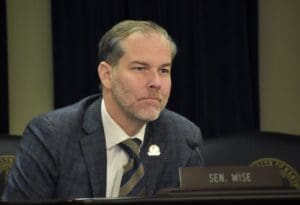
One major piece of unfinished business remains the state budget, which outlines Kentucky’s spending priorities for the next two fiscal years. Budget negotiations are continuing as we work to reach an agreement that reflects responsible fiscal planning while supporting priorities across the commonwealth. As Senate majority floor leader, it’s an incredible honor to be a part of the deliberations that go into crafting the state budget.
While the final days of session often bring long hours and complex decisions, they also represent the culmination of months of work aimed at addressing issues that are important to Kentucky families, communities and businesses. As the majority floor leader, I have the unique challenge of managing this floor activity during this hectic part of session where some bills may merge. In some instances, our chambers may not agree on what should be the final version. In this instance, we go to conference committees and hammer out details.
We delivered Senate Bill 245 to the governor, updating and clarifying Kentucky’s licensing process for retailers selling tobacco, nicotine and vapor products. The bill creates standardized application requirements, clear approval timelines and batch licensing for businesses with multiple locations, while strengthening enforcement through compliance checks, licensure requirements and penalties for violations. It also adds age-verification requirements for deliveries to ensure recipients are 21 years old or older, defines and exempts certain products and establishes a temporary retail license for fairs and festivals without disrupting existing license holders.
Below are several other measures that advanced through the legislative process this week.
HB 4 creates a new crime for grooming minors, targeting behavior that will affect a child for future sexual abuse. It sets stricter penalties depending on the circumstances of the victim and offender. The bill also protects normal, appropriate interactions (like parenting or teaching) and clarifies that sentences for grooming run at the same time as related offenses.
HB 7 allows schools to install cameras on buses to catch drivers who don’t stop when students are getting on or off. It creates a clear system for issuing fines and handling disputes, while making sure recorded images are only used for this purpose. The bill also increases penalties for violations but says these offenses won’t add points to a driver’s record.
HB 10 increases oversight of executive branch actions during the transition period before a new governor takes office. The bill requires review of certain legal settlements, limits noncompetitive contracts and late-term personnel changes, preserves records for incoming administrations, and expands confirmation requirements and travel transparency for constitutional officers.
HB 67 updates Kentucky’s school electronic communication law by clarifying when school employees and volunteers may contact students outside official communication systems. The bill focuses the policy on private electronic communication, updates parental consent requirements and provides exceptions for emergencies, field trips and work-based learning. Senate changes also add school financial transparency provisions and clarify exemptions for school resource officers and directors of pupil personnel.
HB 78 establishes liability protections for firearm manufacturers and sellers against certain lawsuits arising from the criminal misuse of firearms or ammunition and grants enforcement authority to the attorney general.
HB 139 modernizes Kentucky’s election laws by raising campaign contribution limits, improving election administration, tightening voter ID rules and allowing data sharing with federal agencies to verify voter eligibility. It clarifies that political parties can speak on nonpartisan judicial races without changing their nonpartisan nature.
SB 185 creates a long-term plan to help strengthen and stabilize Kentucky State University while keeping its identity as a historically Black land-grant school. It gives leaders more authority to fix financial and operational issues, therefore increasing oversight and transparency. The bill also shifts the university toward more workforce-focused programs, which improves accountability and student success efforts.
HB 189 sets rules about where people can be along state roadways to improve safety. It allows exceptions for emergencies and for workers like first responders and utility crews. Pedestrians can still use designated areas like sidewalks and crosswalks. Local governments can create limited exceptions while the state sets consistent safety standards.
HB 253 improves reading instruction by requiring schools to use proven, research-based methods like phonics and phasing out less effective approaches. It also requires K-5 teacher/staff training and updates to preparation programs. The bill adds student safety measures by banning nondisclosure agreements related to abuse and requiring schools to track misconduct.
HB 257 overhauls the system of assessment and accountability in Kentucky public schools. It adjusts the state portion of the assessments while still complying with federal mandates for testing and school accountability. In addition, it creates a definition for “locally developed indicators of quality” that are measures created or adopted by a local school district that are aligned with academic standards, allow students to demonstrate their ability to apply grade-appropriate knowledge and skill in real world applications, and may include additional locally identified indicators related to priorities established by the local community.
HB 398 ensures the Public Service Commission can approve how utilities charge customers for taking old power plants out of service.
HB 490 allows public postsecondary institutions to remove faculty members for bona fide financial reasons, such as financial exigency, low program enrollment or budget misalignment, with notice and an opportunity for the faculty member to respond.
HB 627 increases the allowable medical expense for funeral, cremation or burial from $1,000 to $5,000 and the allowable weekly reimbursement for work loss and other loss from $200 to $500. It requires medical expenses to be billed within 180 days of the product. The attorney general with concurrent jurisdiction in the investigation and prosecution of insurance fraud.
HB 657 requires background checks for new, reinstated or out-of-state license applicants while keeping results private and limiting fees. It prohibits checks for renewals, with boards reviewing results before granting practice across state lines.
HB 658 requires the Transportation Cabinet to update regulations extending the allowable duration of a limited commercial driver’s license in line with federal standards. The bill also incorporates provisions from SB 7 to allow, but not require, a convenience fee of up to $25.
HB 781 requires the cabinet to create a SNAP education and training plan that helps people improve job skills, find work and build healthy work habits through partnerships with public and private organizations.
It is an honor to represent our community in Frankfort, and I appreciate the many conversations I’ve had with constituents throughout this session. If you have questions about legislation or where bills are in the process, please reach out to me at Max.Wise@kylegislature.gov or call me at 502-564-8100.
(Office of Senate Majority Floor Leader Max Wise)